Introduction
Land-use change alters the habitats available to wildlife. Conservation research examines how the loss of these habitats affects biodiversity.
Search 200M+ papers from your sentence, cite in 12 styles, revise for your journal.
Land-use change alters the habitats available to wildlife. Conservation research examines how the loss of these habitats affects biodiversity.
A shared document handles writing, comments and sharing, and for a text without sources or a target journal that is enough. A paper needs six more steps. Here is where each one happens.
Shared documentOpens the text. The reference list stays plain text.
ScraiberEquations stay editable, and every reference is matched against Crossref, OpenAlex and arXiv.
Shared documentGeneral AI writing help, built for every kind of text.
ScraiberAutocompletion from a model for your field. Scraiber AI proposes edits inside the manuscript, and you accept or reject each one.
Shared documentSearch in another tab, then enter each source by hand or through a reference-manager add-on.
ScraiberSearch 200M+ scholarly works from the sentence, click Cite and pick one of 12 styles.
Shared documentChecking that each DOI exists is manual work.
ScraiberEvery DOI is looked up in CrossRef and marked resolved, traceable, not found or without identifier.
3 checks per document free, unlimited from the Business plan.
Shared documentRead the author guidelines and rework the manuscript by hand.
ScraiberPick one of 7,239 journals and the manuscript type. The proposed changes arrive as suggestions you accept or reject.
Preview free. Applying uses credits or a one-time unlock.
Shared documentDownload as Word or PDF. LaTeX needs another tool.
ScraiberWord with editable equations, PDF or LaTeX, on every plan. LaTeX projects compile to PDF next to the text.
Start your first draft and try AI assistance.
For regular coursework and thesis writing, with scientific autocompletion as you draft.
For ongoing research papers, with personalized autocompletion and a larger AI allowance.
Universities, institutes, university hospitals and learned societies. Available when the organisation is created from an academic email address.
That is the whole product at the academic seat price. Requirement sets and the source check without a limit begin with Business, the activity export with Regulated, patent search with IP.
Consultancies, agencies, publishers, policy institutes and industrial research.
Scientific-field autocompletion, shared documents and journal-aware revision suggestions in one writing workspace.
Choose a target journal and preview suggested revisions to your existing manuscript. Review the text and official author guidance before submission.
Patch-seq combined with volumetric electron microscopy has revealed cell-type-specific inhibitory connectivity profiles across transcriptomically-defined neuron populations, providing a wiring diagram of subtype selective perisomatic targeting (Gamlin et al., 2025), as illustrated in Fig. 2a. These connectivity motifs align with the projection neuron-type specific output dynamics recently characterised in motor cortex corticothalamic circuits (Li et al., 2026), as shown in Fig. 3b-e, with inhibitory inputs analysed across all cortical sections.
Find scholarly sources, add citations inline and choose a style for your bibliography.
Save and organise references in your personal library, then cite them in your documents.
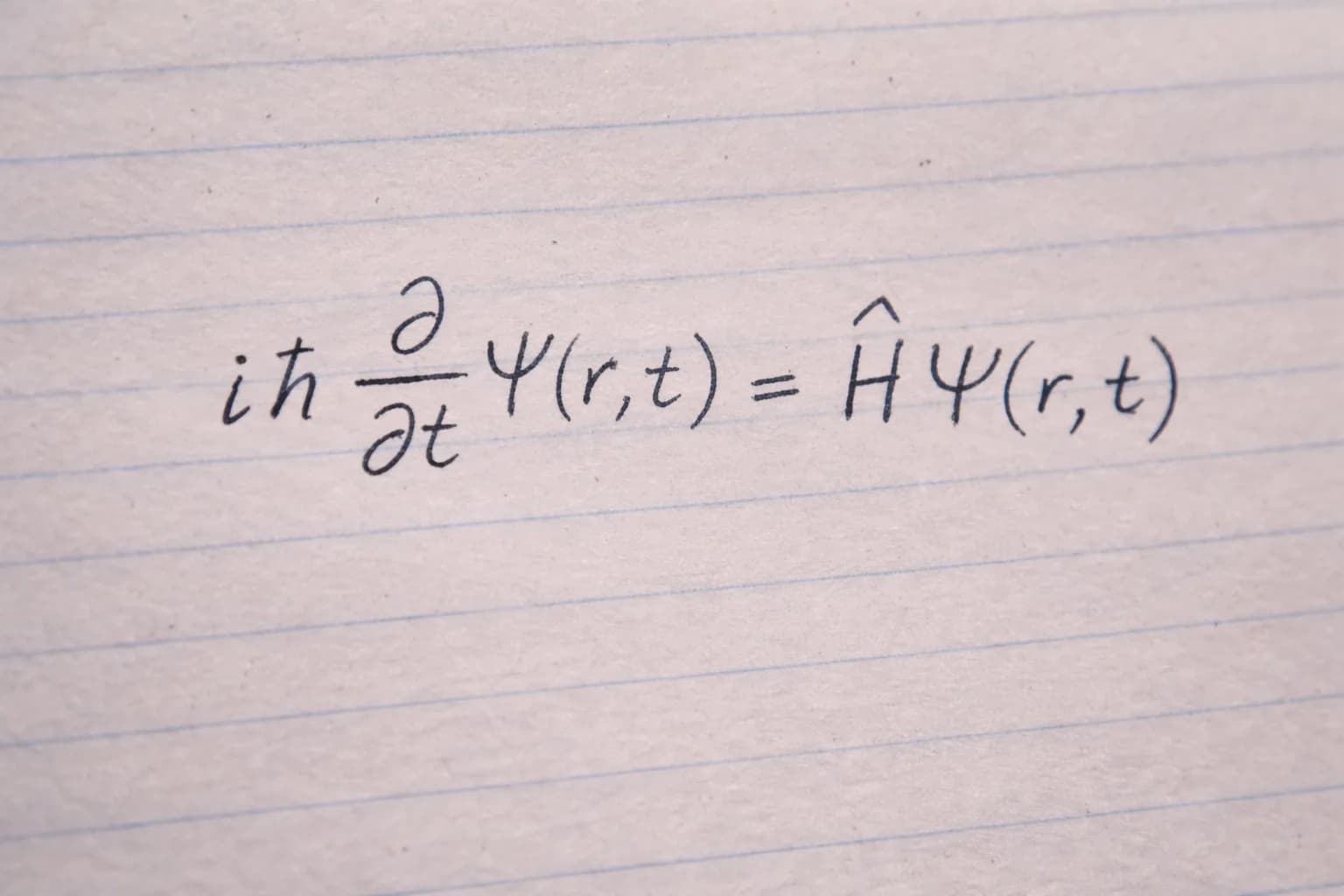
Turn a photo or uploaded equation image into editable LaTeX in your document.
The time-dependent Schrödinger equation dictates the evolution of the wave function in a quantum-mechanical system. It provides a deterministic description of the quantum state's progression over time. This formulation is foundational to quantum mechanics, enabling precise predictions of particle dynamics at the atomic scale.
Turn your instructions into draft introductions and literature reviews, then continue editing in your manuscript.
Get text suggestions as you write, using models for your scientific subfield. Accept, edit or ignore each suggestion.
Bring a Word draft into Scraiber, then write, cite and revise in one editor.
Message coauthors directly, in groups or right inside a document. Mention @Scraiber AI and it answers in the thread with sources.


Coauthors with writing access can edit the same manuscript together.


Manage your lab, reading group, or course. Assign roles, control access, and keep all shared documents in one place.


Bring your coauthors into shared manuscripts, and give every colleague a seat billed to the organisation.
Write with text suggestions, add citations and collaborate on shared documents. Preview journal-aware revisions on your existing manuscript and review the changes before applying them.
Start writing free